Hair Transplant in Mogadishu, Somalia: What You Need to Know
Hair loss can affect appearance and confidence, but choosing a hair restoration treatment should begin with proper assessment rather than simply deciding to undergo a procedure.
For people considering a hair transplant in Mogadishu, Somalia, understanding the process, donor area, hairline planning, available techniques, recovery, and expected growth timeline can help them make a more informed decision.
At Asal Hair & Skin Clinic, hair transplant planning starts with individual assessment because every patient has a different pattern of hair loss, donor capacity, scalp condition, facial structure, and treatment goal.
This guide explains the main stages of the hair transplant journey.
What Is a Hair Transplant?
A hair transplant is a procedure in which suitable hair follicles are taken from a donor area—usually an area with stronger hair growth—and transplanted into areas affected by thinning or hair loss.
The aim is not simply to add more hair.
A properly planned procedure should consider:
The cause and pattern of hair loss
Donor area quality
Available grafts
Hair characteristics
Hairline design
Areas requiring coverage
Long-term progression of hair loss
Patient expectations
Not everyone experiencing hair loss automatically needs a hair transplant. Some patients may require medical assessment or other hair-loss treatments instead.
Step 1: Hair and Scalp Assessment
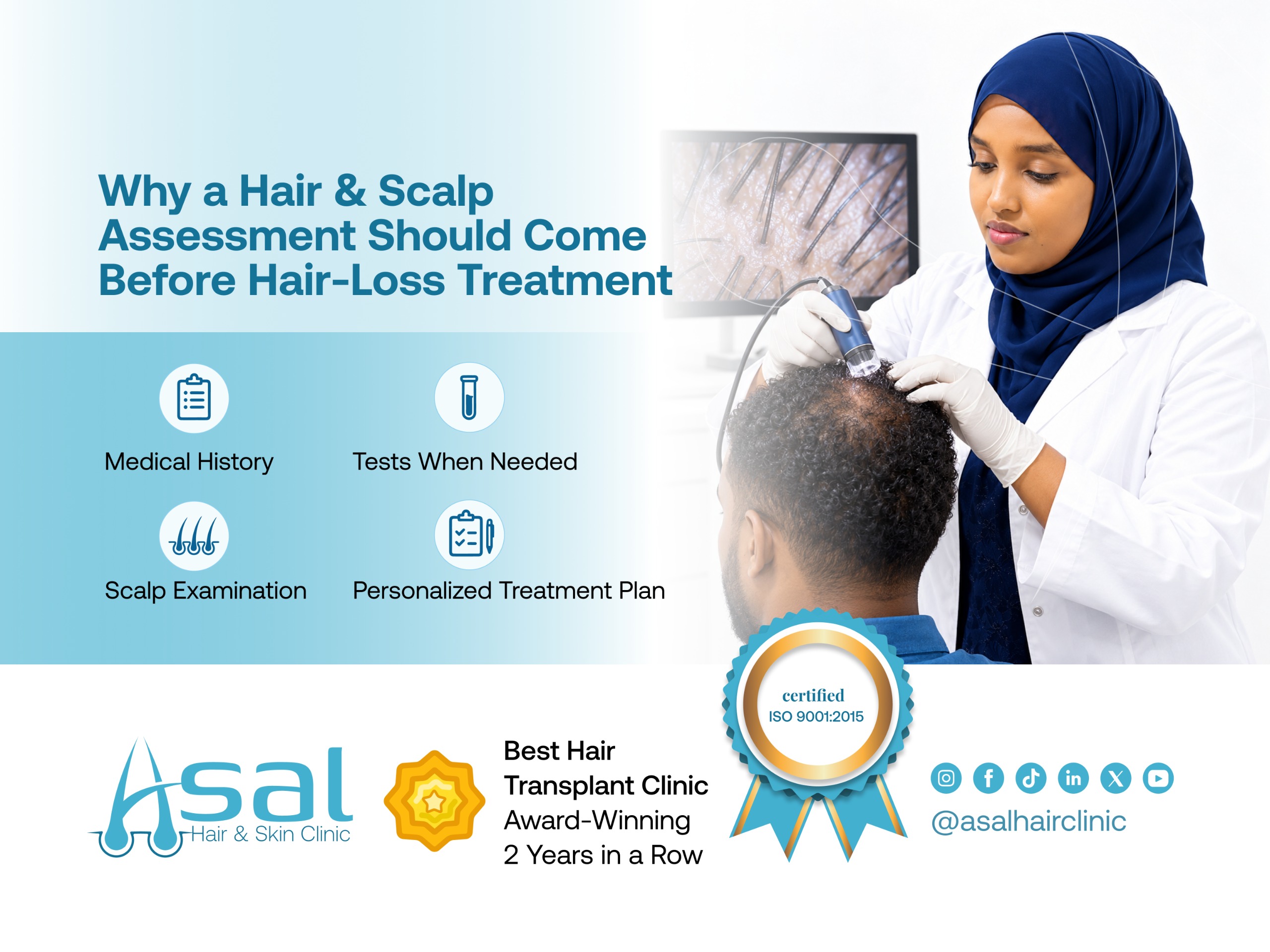
The first stage should be a detailed hair and scalp assessment.
Hair loss can occur for many different reasons. Before recommending transplantation, the clinical team should understand the patient's current condition and determine whether a transplant is appropriate.
Assessment may include evaluation of:
Hair-loss pattern
Hair density
Scalp condition
Donor area
Hair shaft characteristics
Family history
Previous treatments
Medical history where relevant
Depending on the patient's condition, additional investigation may sometimes be recommended before a treatment plan is finalized.
Why Is Assessment Important?
Two people with similar-looking hair loss may require completely different treatment plans.
One patient may be suitable for transplantation, while another may benefit from treating an underlying hair-loss condition first.
For this reason, treatment should be based on diagnosis and assessment rather than appearance alone.