# What Causes Hair Loss? Common Causes and When to Seek Treatment
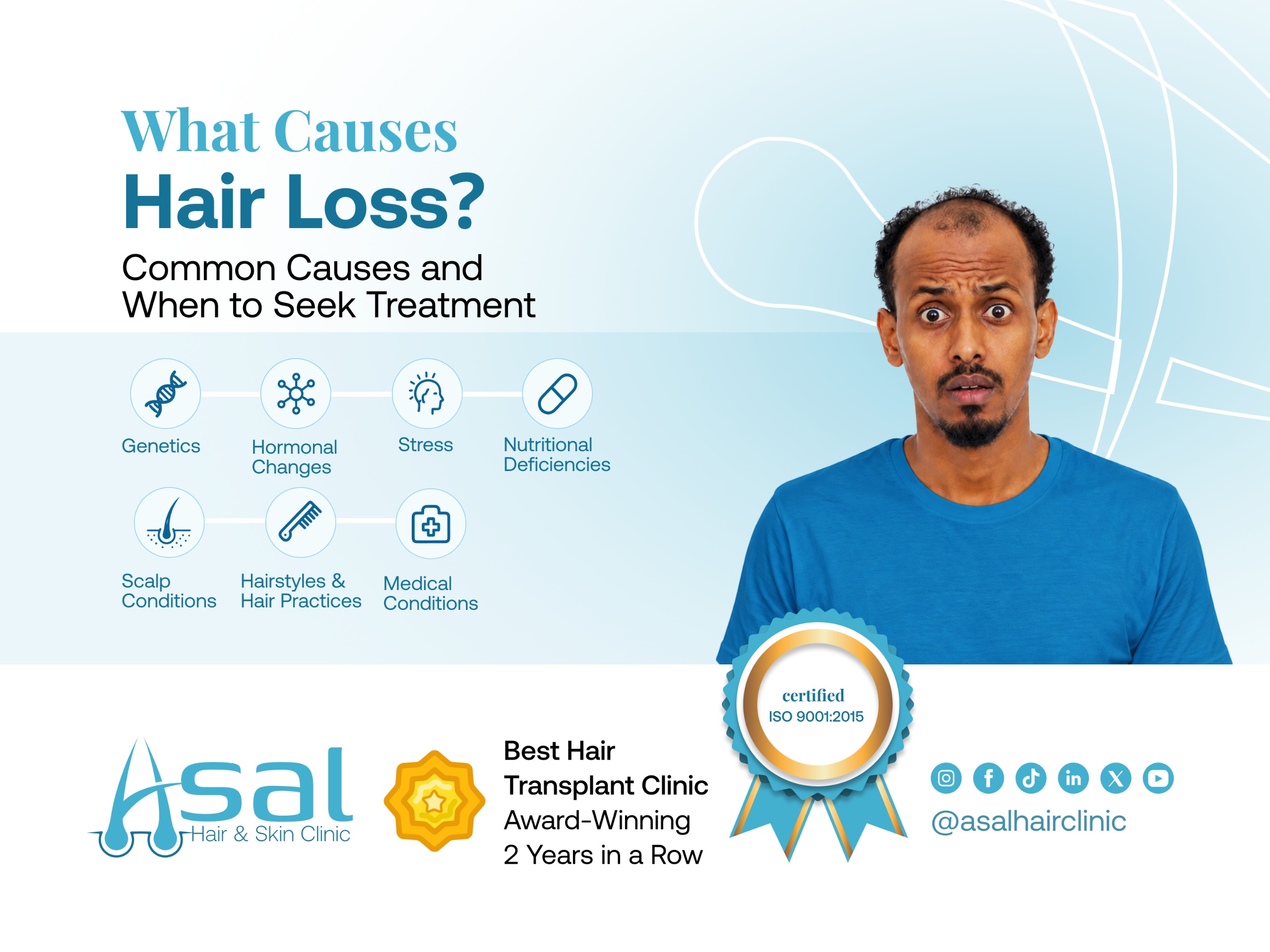
Hair loss is a common concern that can affect both men and women. It may develop gradually over several years or appear suddenly within a relatively short period.
The important point is that hair loss is not one single condition.
Different patients may experience hair loss for completely different reasons, and the correct treatment depends on identifying the underlying cause.
A professional hair and scalp assessment can help determine the pattern of hair loss and whether further medical investigation is necessary.
1. Genetics
Genetics is one of the most common causes of progressive hair loss.
Androgenetic Alopecia
Androgenetic alopecia is often known as:
- Male-pattern hair loss
- Female-pattern hair loss
- Hereditary hair loss
In men, it commonly affects the frontal hairline, temples, and crown.
In women, it may appear as progressive thinning across the top or central part of the scalp.
Genetic hair loss generally develops gradually and may progress over time.
Early professional assessment can help determine the stage of hair loss and which management options may be appropriate.
2. Hormonal Changes
Hormonal changes can influence the normal hair-growth cycle.
Hair thinning or increased shedding may sometimes occur in association with:
- Thyroid disorders
- Pregnancy and postpartum changes
- Menopause
- Certain hormonal conditions
- Changes in androgen activity
Because hormonal hair loss may resemble other types of hair loss, medical history and appropriate testing may sometimes be necessary.
3. Stress and Physical Illness
Significant physical or emotional stress can sometimes trigger increased hair shedding.
One condition associated with this is telogen effluvium.
It may occur after events such as:
- Major illness
- High fever
- Surgery
- Significant emotional stress
- Rapid changes in body health
- Severe nutritional restriction
The increased shedding may begin weeks or months after the triggering event.
A professional assessment helps distinguish temporary shedding from progressive or genetic hair loss.
4. Nutritional Deficiencies
Healthy hair growth depends on adequate nutrition.
In some patients, hair loss or excessive shedding may be associated with deficiencies or nutritional problems involving factors such as:
- Iron
- Ferritin
- Vitamin D
- Vitamin B12
- Protein intake
- Other nutrients when clinically relevant
However, supplements should not automatically be taken without identifying whether a deficiency actually exists.
Laboratory testing may be recommended when the patient's medical history or symptoms suggest a possible deficiency.
5. Scalp Conditions
The health of the scalp can directly affect the hair and follicles.
Conditions that may contribute to hair loss or scalp problems include:
- Fungal infections
- Seborrheic dermatitis
- Inflammatory scalp conditions
- Certain forms of scarring alopecia
- Severe irritation or inflammation
Symptoms such as persistent itching, scaling, redness, pain, or inflammation should not be ignored.
Correct diagnosis is particularly important because some inflammatory or scarring conditions may require early medical treatment.
6. Hairstyles and Hair-Care Practices
Repeated tension on the hair can damage follicles over time.
This is known as traction alopecia.
It may be associated with hairstyles that repeatedly pull tightly on the hair.
Other harmful practices may include:
- Excessive heat
- Repeated chemical processing
- Aggressive brushing
- Tight hairstyles
- Frequent pulling or tension
Changing harmful hair-care practices early may help reduce further damage.
7. Autoimmune Conditions
Some forms of hair loss are associated with immune-system activity.
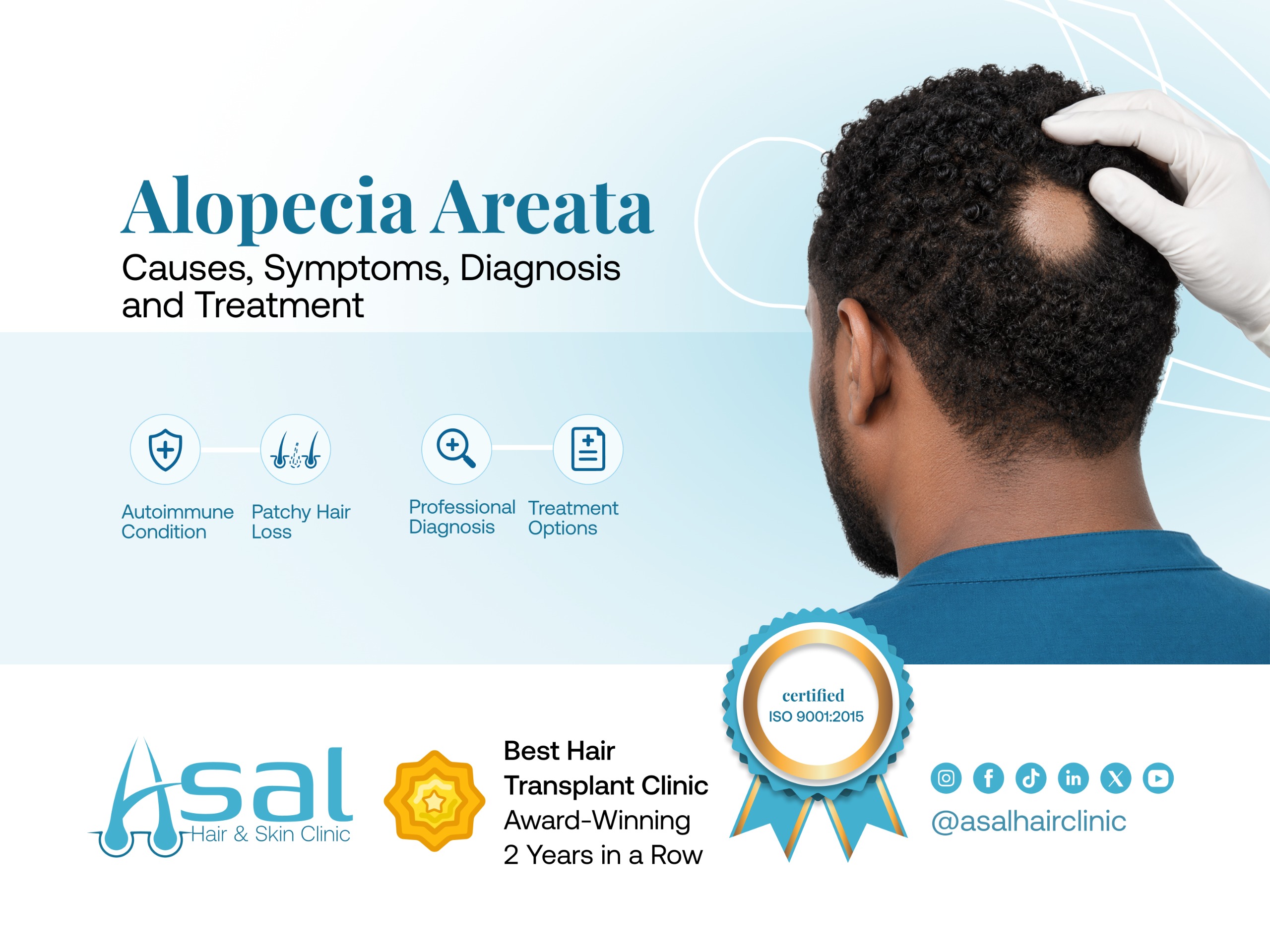
A common example is alopecia areata, which often causes smooth, round or oval patches of hair loss.
It may affect:
- The scalp
- Beard
- Eyebrows
- Eyelashes
- Other body hair
Because patchy hair loss can also result from infections or other scalp conditions, professional diagnosis is important before treatment.
8. Medical Conditions and Medications
Certain medical conditions and medications may contribute to hair loss.
Examples can include:
- Thyroid disorders
- Autoimmune conditions
- Severe systemic illness
- Certain medications
- Significant hormonal disturbances
Patients should not stop prescribed medication because of hair loss without first discussing the issue with their healthcare provider.
When Should You Seek Professional Assessment?
Consider a professional hair and scalp assessment if you experience:
- Sudden hair loss
- Rapidly increasing shedding
- Progressive thinning
- Receding hairline
- Crown thinning
- Patchy bald areas
- Beard or eyebrow hair loss
- Scalp pain, redness, or inflammation
- Persistent itching or scaling
- Hair loss that continues without clear improvement
Assessment is particularly important when hair loss develops suddenly or is accompanied by other symptoms.
How Is Hair Loss Assessed?
A professional assessment may include:
Medical History
The clinician reviews when the hair loss began, how it has progressed, family history, medications, illnesses, lifestyle factors, and previous treatments.
Hair and Scalp Examination
The pattern, density, scalp condition, and hair quality are examined.
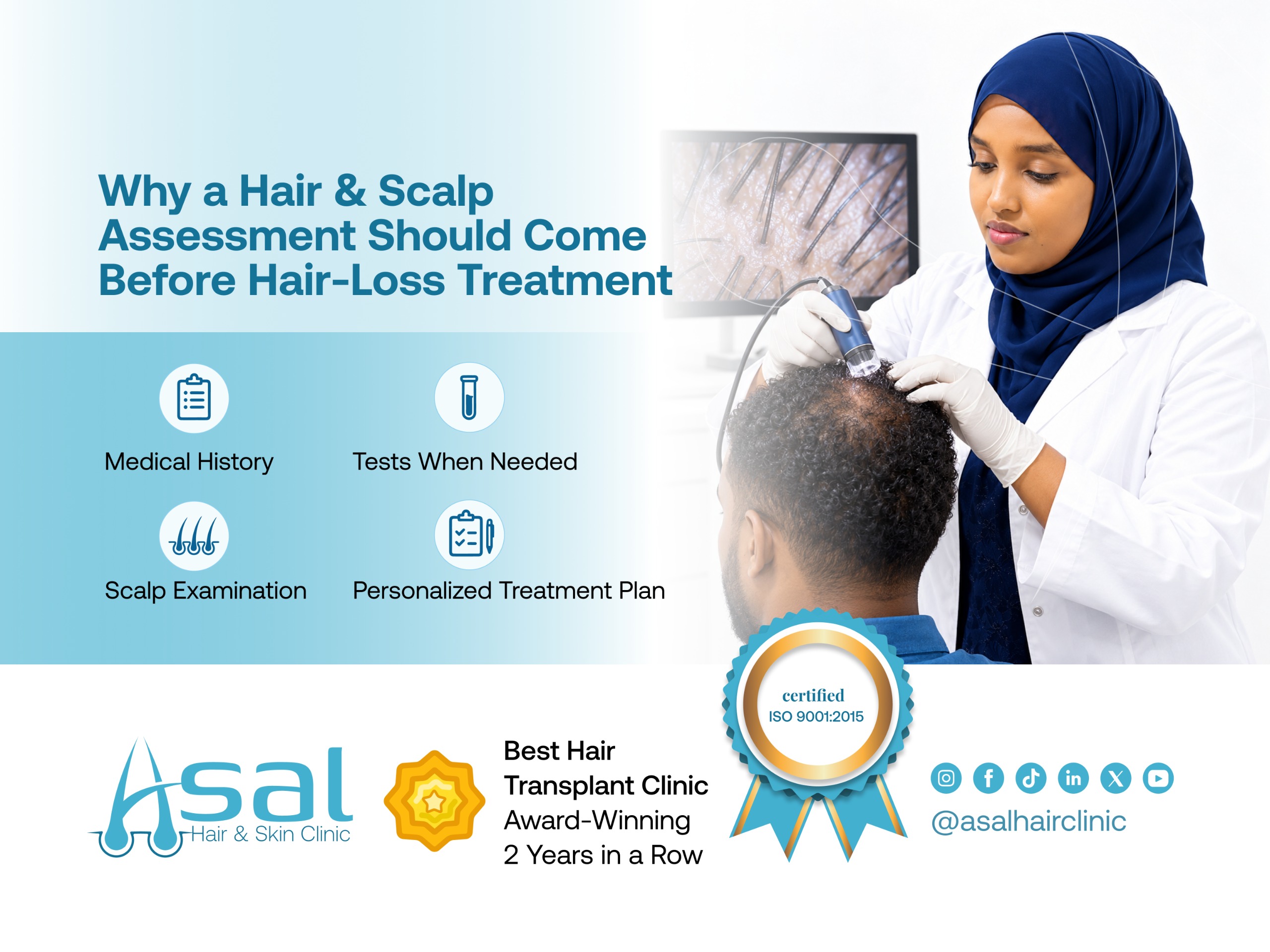
Magnified Scalp Analysis
Specialized tools may be used to examine hair follicles, hair shafts, density, and miniaturization more closely.
Laboratory Tests When Needed
Depending on the patient's history and clinical findings, selected tests may be recommended to investigate nutritional, thyroid, hormonal, or other medical factors.
Not every patient requires the same tests.
Treatment Depends on the Cause
There is no single hair-loss treatment that is appropriate for every patient.
Depending on the diagnosis, an individualized treatment plan may include:
- Medical treatment
- Topical therapies
- PRP
- GFC
- Selected supportive hair treatments
- Correction of confirmed nutritional deficiencies
- Management of scalp conditions
- Hair transplantation for appropriate candidates
- Monitoring and follow-up
The treatment should match the cause of the hair loss rather than simply the visible symptoms.
Is Hair Transplantation Always the Solution?
No.
Hair transplantation can be an effective option for selected patients with suitable donor hair and an appropriate pattern of permanent hair loss.
However, some types of hair loss may be temporary, medically related, inflammatory, or unsuitable for immediate transplantation.
Before hair transplantation, the clinical team should evaluate:
- Cause of hair loss
- Donor-area quality
- Hair density
- Stability of hair loss
- Available grafts
- Recipient area
- Future hair-loss pattern
- Patient expectations
Proper assessment helps avoid recommending surgery to patients who may benefit more from medical treatment or monitoring.
Hair & Scalp Assessment at Asal Hair & Skin Clinic
At Asal Hair & Skin Clinic hair-loss treatment begins with professional assessment.
Our clinical team evaluates the patient's hair-loss pattern, scalp condition, medical history, and other relevant factors before recommending an individualized treatment plan.
When clinically appropriate, additional diagnostic investigations may also be considered.
The goal is to understand why the hair is falling out before deciding how it should be treated.
Asal Hair & Skin Clinic
Taleex, Mogadishu
ISO 9001:2015 Quality Management System Certified
Book your Hair & Scalp Assessment and receive a personalized evaluation of your hair-loss condition.
Medical Disclaimer: This article is intended for general educational purposes only and does not replace professional medical diagnosis, consultation, or individualized treatment.